The Gothic Romance Tradition
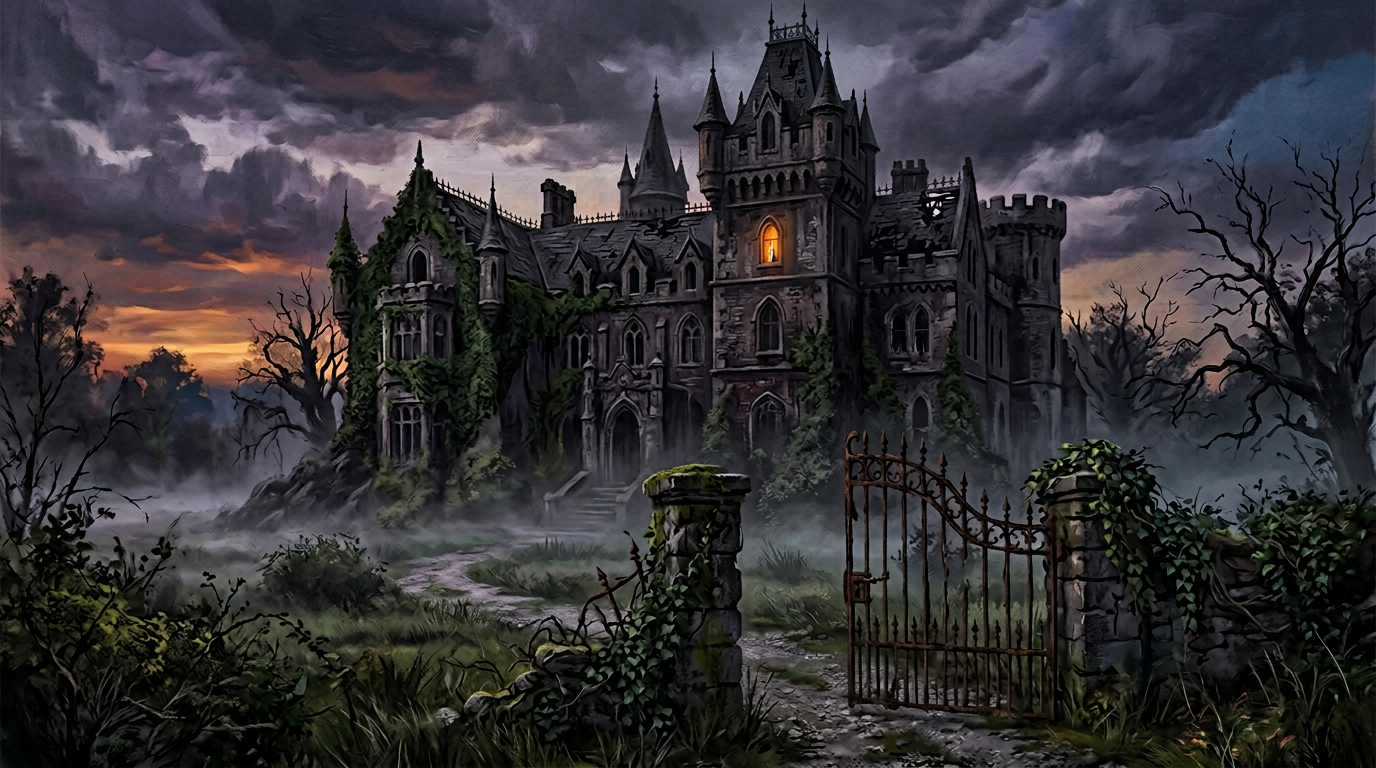
The door does not open easily. It never does in gothic romance. You have to push, and the hinges protest, and the air that comes through smells like damp stone and something floral that died a long time ago. That door is the genre's invitation. Come inside, but understand that the house knows you're here.
Gothic romance is one of the oldest continuous traditions in fiction. Radcliffe, the Brontës, du Maurier, and the contemporary resurgence happening right now all draw from the same well. The core ingredients have not changed in two centuries. A protagonist entering an unfamiliar and threatening environment. A love interest whose darkness is both the attraction and the danger. An atmosphere so thick it functions as a character.
In gothic romance, the environment is a mirror of the relationship's emotional landscape. The fog, the locked room, the portrait whose eyes follow: these aren't decorations. They're the genre's grammar.
What makes the genre distinct from dark romance or suspense is the role of setting and mood. A crumbling estate reflects a relationship built on secrets. A storm-lashed coastline externalizes the protagonist's inner turmoil. The current resurgence is driven by readers who want stories that take atmosphere seriously, use dread as a form of foreplay, and treat the protagonist's psychological interiority as the real terrain being explored.
Elements of Gothic Romance
The characteristics that define the genre
Most gothic romances combine seven recurring elements. A story doesn't need every one, but the strongest examples use most of them and weave them tightly into the love story.
Core elements of gothic romance
- An atmospheric, isolated setting
- An old estate, a remote coast, a lighthouse, a sealed wing of a building. The location is cut off from the everyday world and has presence: its weather, its sounds, and its silences act on the characters.
- A mysterious, brooding love interest
- Often called the Byronic hero: emotionally guarded, physically magnetic, with a hidden history. In craft-driven gothic, the brooding has a source rather than being a posture.
- A buried secret
- Something the house, the family, or the love interest has been hiding. The protagonist's slow discovery of the secret is the mystery engine that runs alongside the romance.
- A vulnerable, observant protagonist
- Usually entering the environment as an outsider (a new wife, a governess, a journalist, a returning relative. Their fresh eye lets the reader notice what the long-time inhabitants have stopped seeing.
- Pathetic fallacy and symbolic setting
- Weather, light, and built environment mirror the emotional state of the story. Storms break when relationships rupture. Locked rooms open as trust grows. The setting is a second narrator.
- The interplay of dread and desire
- Romantic scenes carry an undercurrent of unease, and frightening scenes carry an undercurrent of attraction. The two systems amplify each other across every chapter.
- Slow-revealed mystery and a converging reveal
- The protagonist solves the physical mystery (what's behind the locked door, what happened in the east wing) and the emotional mystery (who the love interest really is) in the same narrative movement.
These elements are what readers and reviewers mean when they search for gothic romance characteristics. A useful test: if you removed the setting and the buried secret, would the story still feel gothic? If yes, the atmosphere isn't doing its job yet.
Using Gothic Atmosphere as Foreplay
Sensory specificity that primes the reader
The chill of a corridor. The sound of something moving behind a wall. The quality of light in a room where someone waits for a person who may or may not come. In gothic romance, these details are more than setting; they are seduction. The atmosphere carries the load that dialogue carries in contemporary romance or action carries in romantic suspense. By the time the love interest enters the scene, the reader is already in a heightened state. The house got them there.
Building this atmosphere requires sensory specificity. Not "the house was old," but the particular smell of damp stone and dried flowers, the way a floorboard protests underfoot, the draft that comes from nowhere and touches the back of the neck. These details prime the reader for intimacy by creating the same heightened sensory awareness that the protagonist experiences in the love interest's presence.
The east wing smelled different after rain. She noticed it on the third night: something underneath the damp stone, something sweet and vegetal, like the house was breathing. The floorboards in the corridor were warmer here, though there was no visible heating, and the light from her candle moved across the wallpaper in a way that made the printed vines seem to shift. She told herself it was the draft. She told herself she was not walking toward his door. But her feet knew the number of steps: fourteen from the landing, and she'd counted them on nights she'd admit to and nights she wouldn't, and when she stopped outside it, she could hear him moving on the other side, and the sound made the corridor feel smaller, closer, like the house was pressing them together.
Gothic atmosphere primes the reader for intimacy by creating heightened sensory awareness. It's the same state the protagonist experiences in the love interest's presence. The house is foreplay.
Writing the Gothic Love Interest
Beyond the Byronic cliché
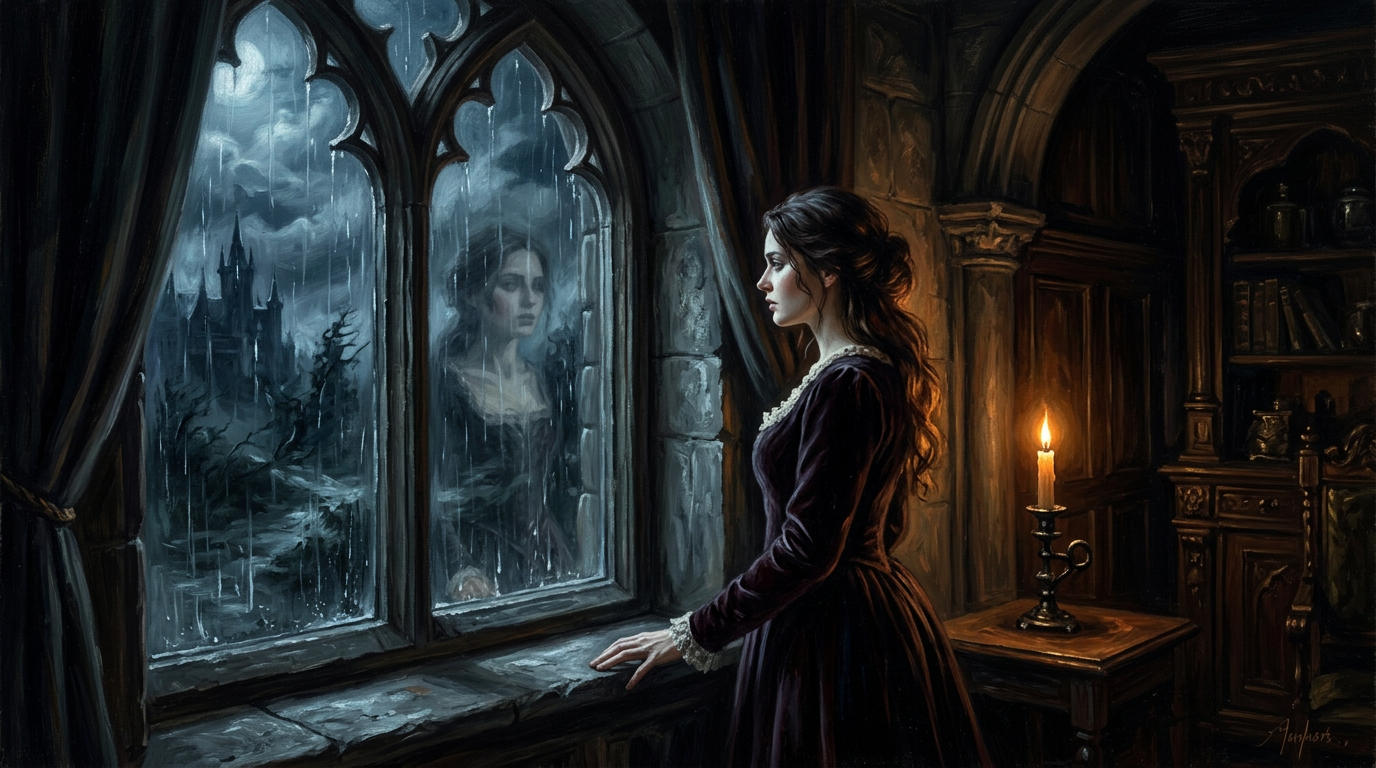
Brooding is not a personality. A character who stands at windows looking tortured, speaks in cryptic fragments, and radiates danger without explanation is wearing a costume rather than inhabiting a psychology. The Byronic hero is the genre's most powerful archetype and its most common failure mode, because writers reach for the surface (dark, mysterious, magnetically dangerous) without building the interior underneath.
The fix is contradictions with a source. What happened to make them this way? What do they lose by maintaining the walls they've built? Where do the cracks appear? The best gothic love interests surprise you. Controlling yet desperately afraid of losing someone. Cold in public but devastated in private. Dangerous to others, tender with the one person who sees through the performance.
He was precise about the strangest things. The fires were always lit before she came downstairs. The library was restocked with books she had mentioned in passing. Not that he would ever acknowledge it. He memorized which staircase she avoided (the west one, where the third step groaned) and she'd find the route cleared, the step repaired, without a word. But when she thanked him for any of it, his face shuttered like she'd said something cruel. She was beginning to understand: care was the thing he couldn't let her see him doing. Not because he didn't feel it, but because the last time someone noticed his tenderness, they'd used it against him.
The most effective version of this archetype has an authenticity gap at its center: a character projecting confidence or menace that masks deeper uncertainty. Give them a history of trust destroyed by betrayal, so the walls exist because the last time they were vulnerable, it cost them everything. These layers are what makes a gothic love interest feel like a person rather than a costume.
Using Setting as Emotional Mirror
How the house tracks the relationship
When she first arrived, the garden was dead. Brown stalks, bare soil, the iron gate rusted shut. By chapter six, she'd noticed green shoots near the kitchen door, and so had he, though neither mentioned it. By chapter ten, the roses along the south wall had started to open, and the gate moved when she pushed it. The garden was not a subplot. The garden was the relationship.
This technique (pathetic fallacy scaled up to the whole setting) gives gothic romance its unique structural power. The reader learns to read the environment as emotional shorthand. When the protagonist discovers a hidden room, the reader understands that something hidden in the love interest is about to be revealed. When a storm breaks, the reader expects an emotional rupture. When the fog lifts, something is about to become clear.
Map the physical exploration of the setting to the emotional exploration of the relationship. When the house opens, the character opens.
Use this structural mirroring deliberately. Rooms that were locked become accessible as trust grows. Passages that were dark reveal light. The overgrown garden shows signs of cultivation. These are emotional markers that let the reader track the relationship's progress through the landscape itself. The house's secrets and the love interest's secrets should resolve in the same narrative movement.
Pacing Between Dread and Desire
A romantic scene that doesn't feel slightly uneasy isn't a gothic romance scene. A scene of dread that doesn't carry an erotic undercurrent is missing the genre's other engine. Gothic romance runs two tension systems at once, desire and danger, and the craft challenge is keeping both present in every chapter even when one is foregrounded.
The most effective approach alternates between scenes that lead with each type of tension while keeping the other as an undercurrent. A romantic scene should still have the fire casting strange shadows, the awareness that the house is listening. A scene of gothic dread should carry the vulnerability of being afraid, and the longing for the one person who might offer safety, or might be the source of the danger.
The dread makes the desire more intense. The desire makes the dread more personal. When both systems fire at once, you are writing at the genre's full voltage.
A slow burn approach paces this interplay across progressive phases. Early chapters weight toward gothic atmosphere and mystery; build the world's unease before the romantic tension becomes explicit. Middle chapters shift as the attraction becomes harder to ignore. Late chapters merge the two systems entirely: the resolution of the mystery and the resolution of the romance become inseparable, arriving in the same scene.
Writing the Gothic Romance Reveal
When the house's secret and the love interest's secret resolve together
Every gothic romance builds toward a reveal: the moment the house surrenders its central secret and the love interest's walls come down in the same narrative movement. These two revelations are structurally inseparable. In the best gothic romances, what the house has been hiding and what the love interest has been hiding are the same thing.
The protagonist has been exploring two mysteries in parallel. The physical mystery of the space (what's behind the locked door, what happened in the east wing, why the portrait was turned to the wall) and the emotional mystery of the love interest (why they're guarded, what they're protecting, what broke them). When both answers arrive together, the reader experiences the resolution of two arcs at once, and the effect is exponential.
Effective gothic reveals share a few properties.
- The reveal recontextualizes what came before. Earlier details, like the repaired staircase, the specific silences, or the locked room, take on new meaning.
- The emotional stakes are inseparable from the physical discovery. The protagonist does not just learn a fact; they learn something that changes how they see the love interest.
- The protagonist's response is the story's moral center. How they react to the truth determines whether the romance survives the secret.
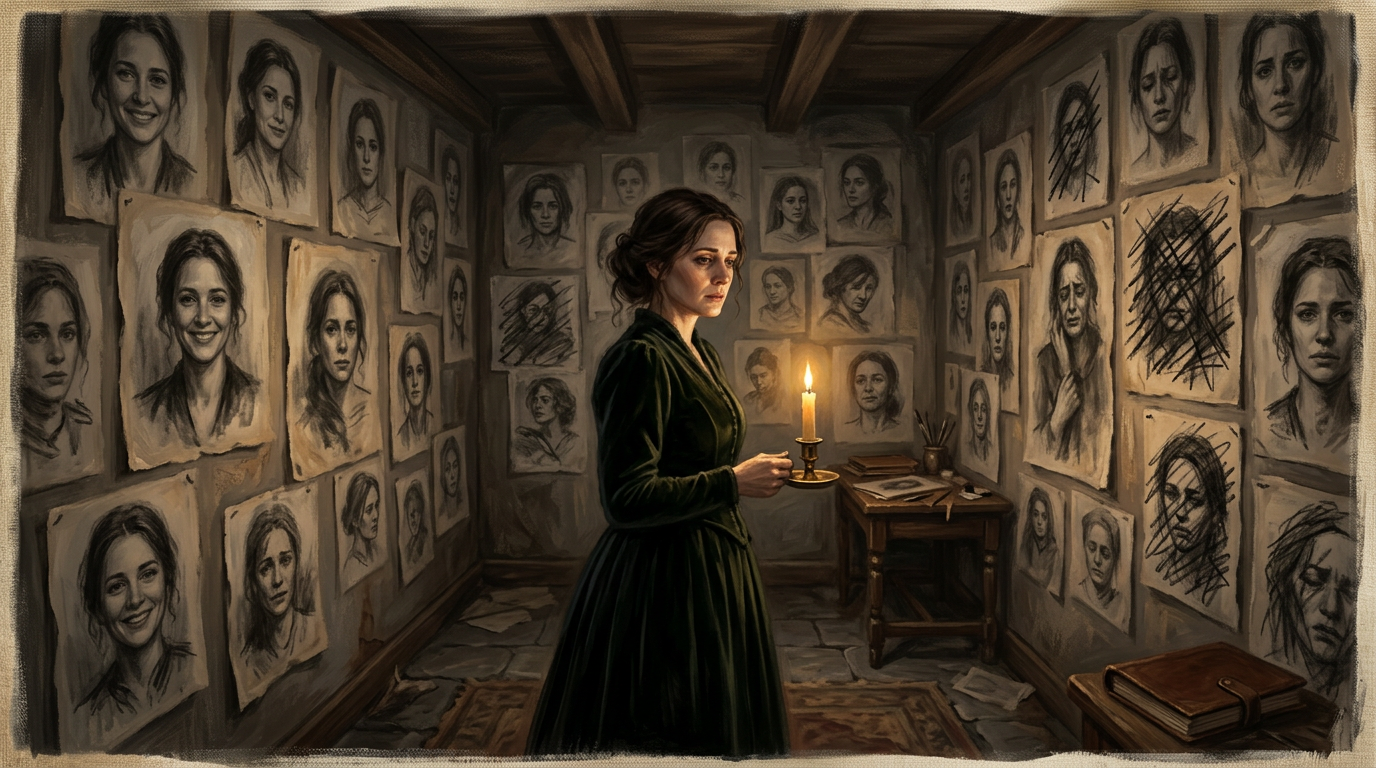
The room behind the locked door was small. That was the first surprise. She'd imagined something vast, proportional to the secrecy around it. But it was barely larger than a closet, and it held: a chair, a window that faced the ocean, and the walls covered (every inch) with charcoal drawings of a woman's face. The same face, hundreds of times, at different angles, in different light. Some were smudged like they'd been touched too often. Some were crossed out. 'My mother,' he said from behind her. She hadn't heard him follow. 'She left when I was nine. I was trying to remember her face before I forgot it entirely.' She looked at the drawings and then at him and understood, all at once, everything: the locked doors, the walls he built, the way he flinched from tenderness. He hadn't been hiding something dangerous. He'd been hiding grief.
Write the reveal at the scale your story demands. In some gothic romances, it's a single devastating scene. In others, the secrets emerge gradually: a door opened here, a confession drawn out there, until the protagonist assembles the full picture. Either way, the physical discovery and the emotional reckoning should arrive together. That convergence is the genre's signature payoff.
Gothic Romance in Practice
How the canonical novel uses setting as a second narrator
Daphne du Maurier's Rebecca is the modern template for gothic romance, and the choice that makes it work is structural rather than atmospheric: the unnamed narrator is an outsider arriving at Manderley, and her perspective lets the reader notice what the long-time inhabitants have stopped seeing. Du Maurier uses the house, the weather, and the staff as the second narrator, with Rebecca's absence acting on every room.
Daphne du Maurier, Rebecca (1938)
Silvia Moreno-Garcia's Mexican Gothic shows the genre's modern range: same machinery (isolated estate, secret-bearing family, observant outsider) applied to a 1950s Mexican setting with mycological body horror layered into the dread. The book confirms that gothic romance's elements travel: the engine works across centuries and cultures when the setting is treated as a force, not a backdrop.
Silvia Moreno-Garcia, Mexican Gothic (2020)
Gothic Romance Compared with Dark Romance
Where the menace lives changes the genre
Gothic romance and dark romance are often shelved together and frequently overlap, but the engines differ.
| Axis | Gothic Romance | Dark Romance |
|---|---|---|
| Defining engine | Setting and atmosphere as a narrative force. | Power dynamics and psychology inside the relationship. |
| Where danger lives | In the environment: the house, the history, the fog. | Between the people: morally complex actors and contested boundaries. |
| Mystery vs. transgression | Mystery: what is being hidden? | Transgression: what will be crossed? |
| Typical reveal | Physical and emotional secrets resolve together. | A reckoning scene forces integration of what happened. |