What Defines Dark Romance
The reader who picks up a dark romance knows what they're walking into, and they want it anyway. That tension between knowing something is dangerous and choosing it regardless is more than marketing; it is the genre's central nerve, and it is the exact experience the best dark romance characters have on every page.
The genre gets misunderstood as shock value or transgression for its own sake. It is neither. Dark romance is psychological fiction that uses desire as its primary lens. The darkness is the terrain the characters have to cross to reach each other, and sometimes to reach themselves. Power imbalances, forbidden attraction, characters who want things that scare them, relationships that violate the rules the characters built their identities around. The stakes aren't "will they get together?" They're "what will getting together cost them, and who will they become?"
The appeal of dark romance is watching characters navigate desire when the stakes are real and the choices are hard.
What separates craft-driven dark romance from gratuitous edge is interiority. The reader needs to understand why a character is drawn to something dangerous, not just that they are. "She was attracted to him despite the danger" is a sentence. "She was attracted to him because something in the danger felt like recognition, like he saw the parts of her she'd been told to keep hidden" is a character. The psychology of desire under pressure is the genre's core material, and writers who explore it with genuine nuance produce work that stays with the reader long after they close the book.
From the Genre
How a canonical dark romance handles power and consequence
Emily Brontë's Wuthering Heights is often cited as the proto-dark-romance: it treats Heathcliff and Catherine's bond as transgressive, generational, and morally costly, and refuses to absolve either of them. The novel's structural choice (telling the story through nested unreliable narrators) keeps the reader at exactly the distance dark romance demands, close enough to feel the pull and far enough to see the damage.
Emily Brontë, Wuthering Heights (1847)
Dark Romance Tropes and Themes
The recurring elements that shape the genre
Dark romance leans on a recognizable set of tropes and psychological themes. None are mandatory, but most strong dark romances combine three or four of them and use the rest with intention.
Common dark romance tropes
- Morally gray or villain love interest
- A love interest who has done genuinely harmful things and isn't redeemed into harmlessness by the relationship. The reader is asked to understand them, not to absolve them.
- Power imbalance
- Wealth, status, knowledge, magic, or institutional power that puts one character meaningfully above the other. The imbalance creates the genre's core tension and demands careful handling.
- Captivity, possession, or obsession
- Stories in which one character controls the other's environment or fixates on them in a way that crosses normal social boundaries. Common in mafia, dark fae, and stalker subgenres.
- Forbidden or transgressive attraction
- Attraction the characters have judged other people for. Overlaps heavily with forbidden romance; in dark romance the prohibition usually carries danger as well as social cost.
- Trauma bonding and survival intimacy
- Characters forged together by shared danger, captivity, or grief. The bond is real and the writer's job is to ask what it actually means in daylight.
- Revenge and reckoning
- Romantic entanglement with the person responsible for a past wound. The reckoning scene is where the story decides whether revenge or repair will define the ending.
These tropes are how readers find dark romance and how they describe what they want. The craft challenge is using them as scaffolding for character work, not as a substitute for it.
Writing Morally Complex Characters
A dark romance love interest who is simply "dangerous" (brooding looks, territorial behavior, vague criminal undertones) is a costume rather than a character. The reader can feel the difference. Morally complex characters work because their contradictions create genuine uncertainty, and uncertainty is where tension lives.
The best dark romance characters have psychological texture. They behave in ways that surprise the reader while staying internally consistent. A character who is controlling in public but devastated in private tells a different story than one who is controlling everywhere. A character who pushes every boundary but stops cold at a specific line reveals where their real values live, and the reader wants to know why that line exists.
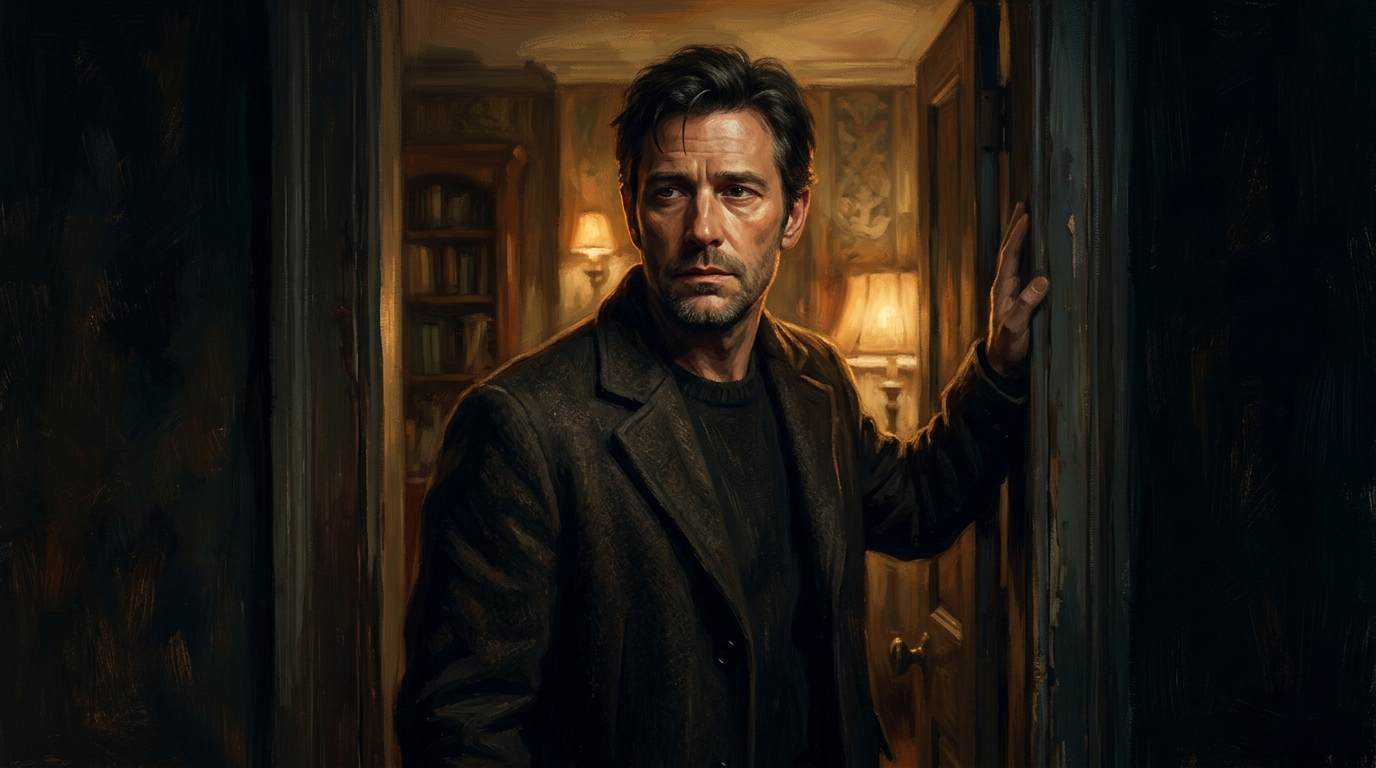
He made her wait. Not out of cruelty, she'd learn that later. He'd learned that the people who stayed after the silence were the ones who meant it. His mother had left during a silence. His business partner had left during one. The woman before her had left during the longest one, three days where he didn't call and she didn't come back and he told himself that was the answer. So he made this one wait. And when she was still there on the other side of it, angry, yes, saying things he deserved to hear, he felt something shift in his chest that he recognized as terror. Because now there was something to lose.
The question isn't whether a dark romance character has done terrible things. It's whether the reader understands the why.
Give your characters internal conflicts that shape how they experience wanting. One is drawn toward someone they've decided they can't have. Another has desire at war with self-judgment. A third finds vulnerability indistinguishable from a death sentence. These wounds are engines that drive behavior scene by scene, and they give readers a reason to stay invested even when the story goes to uncomfortable places.
Dark Romance Psychology Over Shock Value
Why interiority is the genre's real craft test
Here is the craft test. Can you remove the transgressive element from a scene and still have a scene that works? If yes, the psychology is carrying the weight and the darkness amplifies it. If no, if the scene is nothing without its shock, you've written spectacle, not fiction.
A scene in which something transgressive happens is only as effective as the reader's understanding of what it means to the characters involved. Without psychological context, dark content reads as provocation. With it, the same content reads as revelation. The difference is interiority. Spend as much time in a character's interior experience as you do on external events.
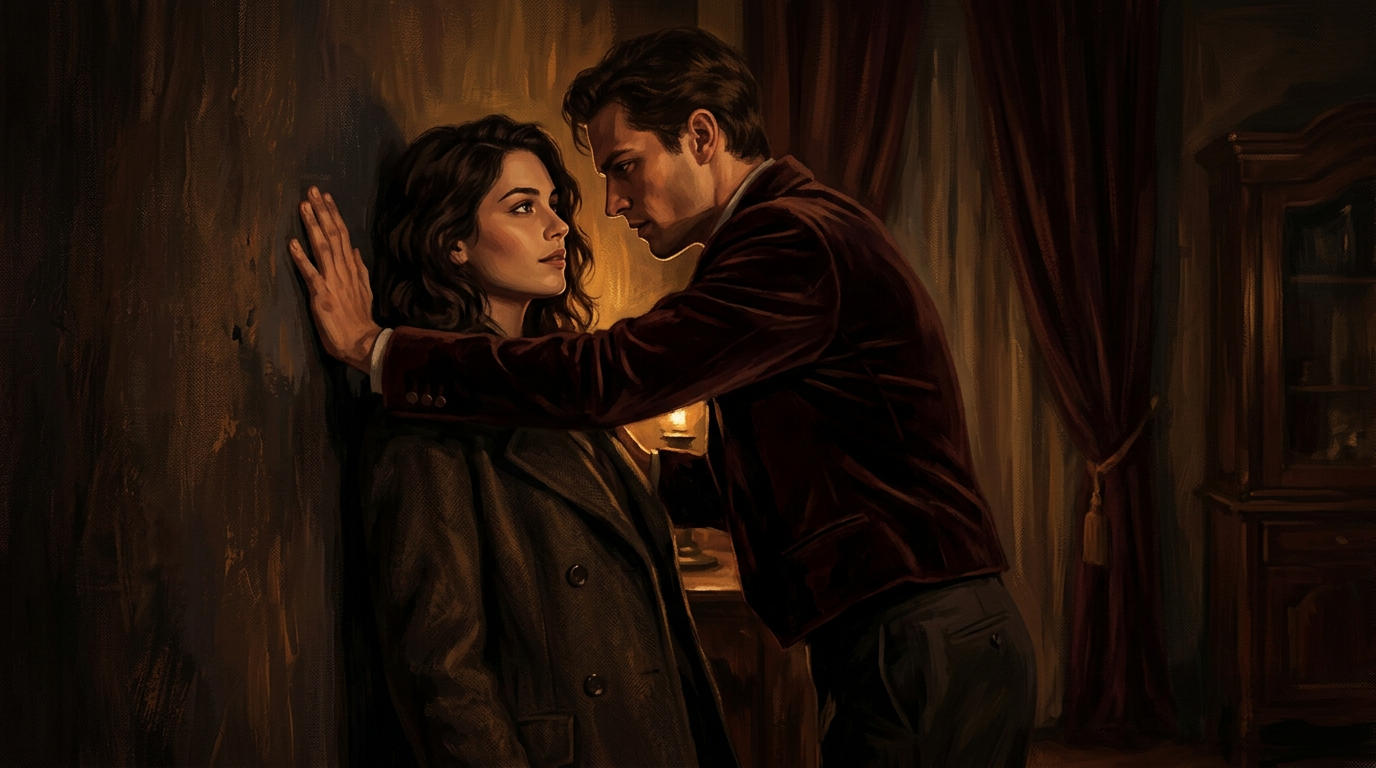
His hand was on her throat and she should have been afraid. She catalogued this fact the way someone might note an exit sign: useful information, filed away, not acted on. What she actually felt was the opposite of afraid. She felt seen. That was the problem she'd carry with her for weeks afterward: not that it had happened, but that she'd wanted it to. Not that he'd known exactly how much pressure, but that his knowing meant he'd been paying a kind of attention nobody else had ever paid her.
Voice matters enormously here. A confessional first-person narrator who is honest about their own contradictions creates a completely different reading experience than a controlled third-person narrator who reports events without interpretation. Choose the voice that matches your story's psychological register. Raw and unfiltered for characters confronting their own desires; cinematic and measured for stories where the darkness is environmental.
Pacing Darkness: When to Escalate
Dark romance runs a dual tension system. Romantic tension and threat tension both need to escalate together. If the darkness peaks in chapter two but the romance doesn't catch up until chapter eight, the story feels lopsided. If the romance resolves but the darkness never reaches its climax, the reader feels cheated out of the stakes they were promised.
A common approach is to open with a dark inciting event that establishes what's at stake, then alternate between chapters that build romantic tension and chapters that deepen the danger or moral complexity. Intimacy followed by threat. Vulnerability followed by consequence. This push-pull rhythm keeps the reader off-balance in a way that mirrors the characters' own disorientation: they don't know which version of this relationship is real, and neither does the reader.
In dark romance, the darkness and the desire should escalate in tandem. One shouldn't be waiting for the other to catch up.
Some stories hit hard early and sustain intensity, pinning the reader from chapter one. Others oscillate between surrender and resistance, with the darkness providing the resistance. Match your escalation structure to the type of darkness you're writing. Psychological darkness benefits from deliberate, slow escalation. Suspense-driven darkness can sustain earlier peaks.
Navigating Consent in Dark Romance
This is the craft question dark romance writers get asked most, and it has no single answer. Dark romance explores scenarios where power is unequal, boundaries are contested, and desire operates in territory that isn't safe. How you handle that is a craft decision with real consequences for reader trust.
The most effective approach is internal consistency. Establish the rules of your story world and follow them. If your characters operate by a code, spoken or unspoken, the reader needs to understand that code early enough to read the subsequent scenes through it. Dark romance can portray situations that are uncomfortable, dangerous, or transgressive while maintaining an internal logic the reader can hold onto. Without that logic, the reader feels unsafe in the unproductive sense: not the tension-building unease the genre invites, but the "I don't trust this author" kind.
The real question is whether you are controlling the darkness or whether it is controlling you.
This is where editorial precision matters. Identify the sensitive subjects in your story and decide how to handle each one, either with deliberate care or by excluding it entirely. The darkness should stay within the boundaries you have intentionally set. Precision over avoidance. You are not softening the story; you are shaping it.
Writing the Dark Romance Reckoning Scene
The aftermath that makes the crossing matter
Every dark romance arrives at a moment when a character has to look at what they've done, or what they've wanted, and decide whether they can live with it. This is the reckoning scene, and it is often the most important scene in the book.
The reckoning is the aftermath of the darkness, not its climax. A character who has crossed a line doesn't get to uncross it. They have to integrate the crossing into who they are. That integration is where dark romance does its deepest character work, and skipping it is the most common way writers undermine an otherwise strong arc.
Effective reckonings involve three elements.
- Self-confrontation: the character stops rationalizing and faces what they did or wanted, without the story providing easy absolution.
- Cost: something is lost or permanently changed. A self-image, a relationship, a moral certainty the character used to rely on.
- Choice: the character decides what the reckoning means going forward. Do they double down? Retreat? Transform? This decision is where the character's arc turns.
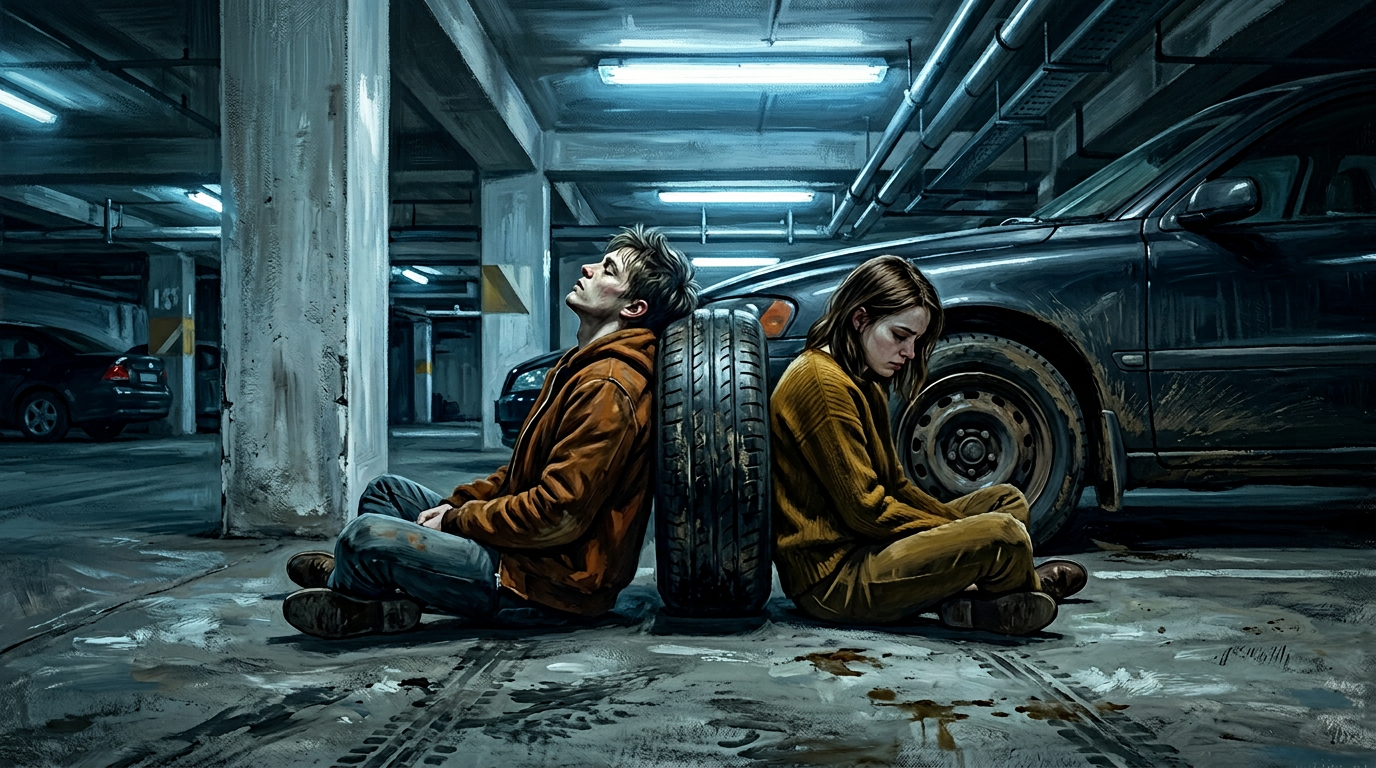
She found him in the parking garage at 3 AM, sitting on the concrete with his back against the tire of her car. He didn't look up. 'I need you to tell me I'm not what I think I am,' he said. She sat down next to him. The concrete was cold and the fluorescent light made everything look clinical. 'I can't do that,' she said. He nodded like he'd expected it. 'But I can tell you that what you think you are isn't the whole picture.' He was quiet for a long time. 'What's the rest of the picture?' 'I don't know yet,' she said. 'But I'm still here, which should tell you something.' It did. It told him everything. That was the part that scared him most.
Write the reckoning at the scale your story demands. In some dark romances, it's a single devastating conversation. In others, it unfolds across multiple chapters as a character tries and fails and tries again to reconcile who they were with who they've become. Don't rush it. The reader has invested in the darkness. They need to see what it costs.
Dark Romance Compared with Adjacent Subgenres
Where dark romance ends and gothic, suspense, or erotica begins
Dark romance overlaps with several adjacent subgenres. Knowing the line keeps the story honest to its real engine.
| Axis | Dark Romance | Gothic Romance |
|---|---|---|
| Core engine | Psychological dynamics inside the relationship. | Atmosphere, setting, and a buried secret outside it. |
| Where the danger lives | Between the people: power, obsession, harm. | Around the people: the house, the history, the fog. |
| Typical setting | Contemporary or fantasy, often urban or institutional. | Isolated estate, lighthouse, remote town. See our gothic romance guide. |
| Reader payoff | Reckoning and chosen love after transgression. | Revelation: secret resolved and walls fall together. |
| Axis | Dark Romance | Romantic Suspense |
|---|---|---|
| Source of threat | Internal to the relationship; the love interest may be the danger. | External: killer, conspiracy, accident. Couple faces it together. |
| Tone | Morally complex, often transgressive. | Plot-driven thriller with romance arc. |
| Trigger expectations | Content warnings standard and expected. | Violence shown but rarely transgressive in a relational way. |